I. Overview
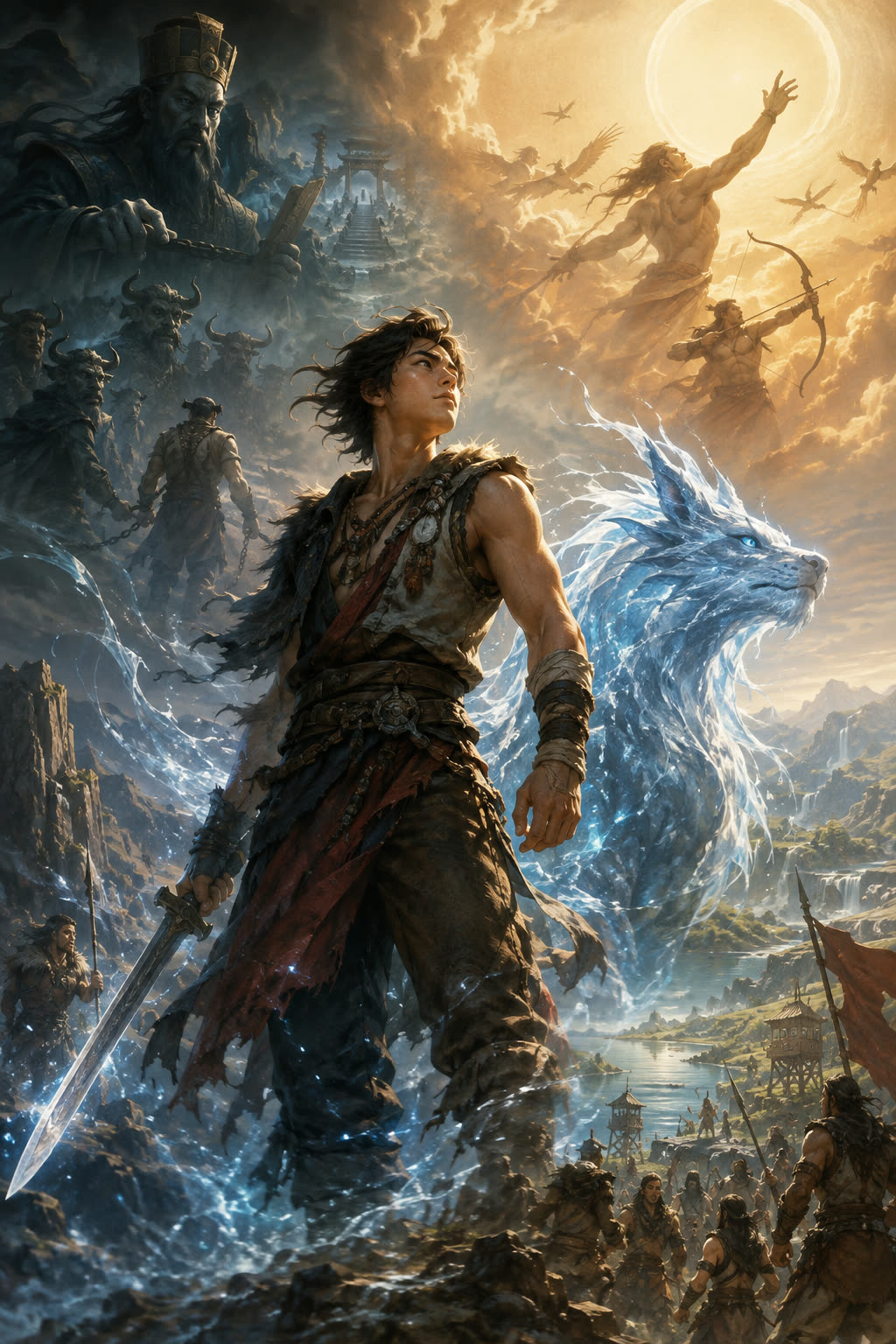
Desolate Era is a classical xianxia by I Eat Tomatoes, the prolific author behind Coiling Dragon and Stellar Transformations, and it opens on one of the genre’s cleanest premises. Ji Ning dies on modern Earth of a wasting illness, wakes in the underworld, and is judged and sent to be reborn into the Ji clan, a tribal people in a primal world where Kuafu chases the sun and Houyi shoots the golden crows. He inherits a modern mind and a heaven-grade meditation method, then sets out to cultivate.
The early volume is a tribe-and-training arc. Ji Ning learns the Crimson Bright Nine Heavens Diagram to forge his body and the Three-Foot Sword to forge his blade, bonds with a water beast named Baishuize who becomes his brother in arms, and throws himself into the clan’s wars against demon beasts and the rival Snow Dragon Mountain sect. I Eat Tomatoes keeps the pace brisk and the goals concrete: protect the family, win the next duel.
The path climbs by layers: from the Ji lands around Winged Snake Lake, through the Black-White School and the tutelage of the immortal Bodhi, into the wider Three Realms where ancient gods, demon kings, and heaven’s own calamities test him, until Ji Ning stands as a sword immortal who can name his own dao and defy the fabric of the world.
Two words carry the book: warm and steady. Ji Ning fights for family and friends above glory, and his bond with Baishuize and later with his Dao companion Yu Wei gives the long climb a human center. I Eat Tomatoes writes cleaner and more heart-forward than the darker web-novel epics; this is a hero you root for, not one you fear.
II. Highlights
The judgment in the underworld
Ji Ning dies and finds himself herded through the ghostly bureaucracy of the dead, whipped along by ox-headed wardens until a giant deity plucks him out by name. Judge Cui interviews the modern soul, then sends him to be reborn. The scene sets the book’s hook: a twentieth-century mind dropped into a world of tribal wars and immortals.
Bonding the water beast
Deep in the wilds, Ji Ning meets Baishuize, a clever water beast, and the two fight side by side until the creature takes human form and becomes his sworn companion. Their friendship outlasts every sect and army in the book, and it anchors Ji Ning’s loyalty to the people at his back.
The Winged Snake Lake war
The volume’s climax drops Ji Ning into a blood feud with demon beasts and the Snow Dragon Mountain sect that threatens his whole clan. He returns from training, joins the final battle, and cuts down the enemies who thought the Ji family easy prey. The set piece shows the book at its best: clear stakes, clean sword work, a satisfying win.
The first stroke of the Three-Foot Sword
Ji Ning’s signature art, the Three-Foot Sword, pays off in a single duel where one perfected cut ends a rival who mocked him. I Eat Tomatoes lingers on the moment the boy who was reborn frail becomes a blade the clan relies on.
IV
Should you read it?
Reasons to read
- It is a clean, accessible entry into Chinese xianxia, less intimidating than the thousand-hour doorstoppers.
- The progression is satisfying and the hero is genuinely likeable, a rare combination in the genre.
- I Eat Tomatoes builds a coherent world that grows from tribe to cosmos without losing the personal stakes.
- Desolate Era is a classical xianxia by I Eat Tomatoes, the prolific author behind Coiling Dragon and Stellar Transformations, and it opens on one of the genre's cleanest premises. Ji Ning dies on modern Earth of a wasting illness, wakes in the underworld, and is judged and sent to be reborn into the Ji clan, a tribal people in a…
Reasons not to read
- The cultivation formula repeats: train, duel, breakthrough, repeat, across a very long run.
- The prose is competent but plain; readers wanting literary weight will find it thin.
- Romance and side characters stay secondary to the hero's climb.
- The imported guide still needs a final editorial pass.
Who it fits
- Newcomers to xianxia who want a friendly, well-structured starting point;
- readers who like reincarnation premises and steady, rewarding power growth;
- fans of I Eat Tomatoes' other works looking for the same reliable momentum.
- Conversely, if you need moral ambiguity, literary style, or a short book, this one will wear you out.
- readers who like reincarnation premises and steady, rewarding power growth;
- fans of I Eat Tomatoes' other works looking for the same reliable momentum.
- Conversely, if you need moral ambiguity, literary style, or a short book, this one will wear you out.
- Readers looking for a different reading experience.
Reader community
Would you recommend it?
Register or sign in to recommend this novel and comment.
Reader comments
0 comments