I. Overview
I Shall Seal the Heavens is Er Gen’s signature xianxia, the one that turns the usual cultivation creed inside out. Most cultivation heroes want to ascend, to join the heavens. Meng Hao wants to seal them. The book opens on a line that becomes his whole religion: if I want something to exist, heaven cannot lack it; if I want it gone, heaven cannot keep it. That is not a hero who serves the cosmos. That is a man who intends to own it.
The opening is quiet and lyrical, unusual for the genre. Meng Hao is a poor scholar in the small state of Zhao who has failed the imperial exam three years running, so broke he throws a gourd carrying his ambitions into the river. A cry for help from a cliff pulls him into the Reliance Sect and the cultivation world, and the boy who once mourned being “a bookworm good for nothing” discovers he is a natural. The early chapters balance his hunger for spirit stones, his cunning, and a real tenderness, and the tone stays brighter than Er Gen’s darker works while keeping his melancholy underneath.
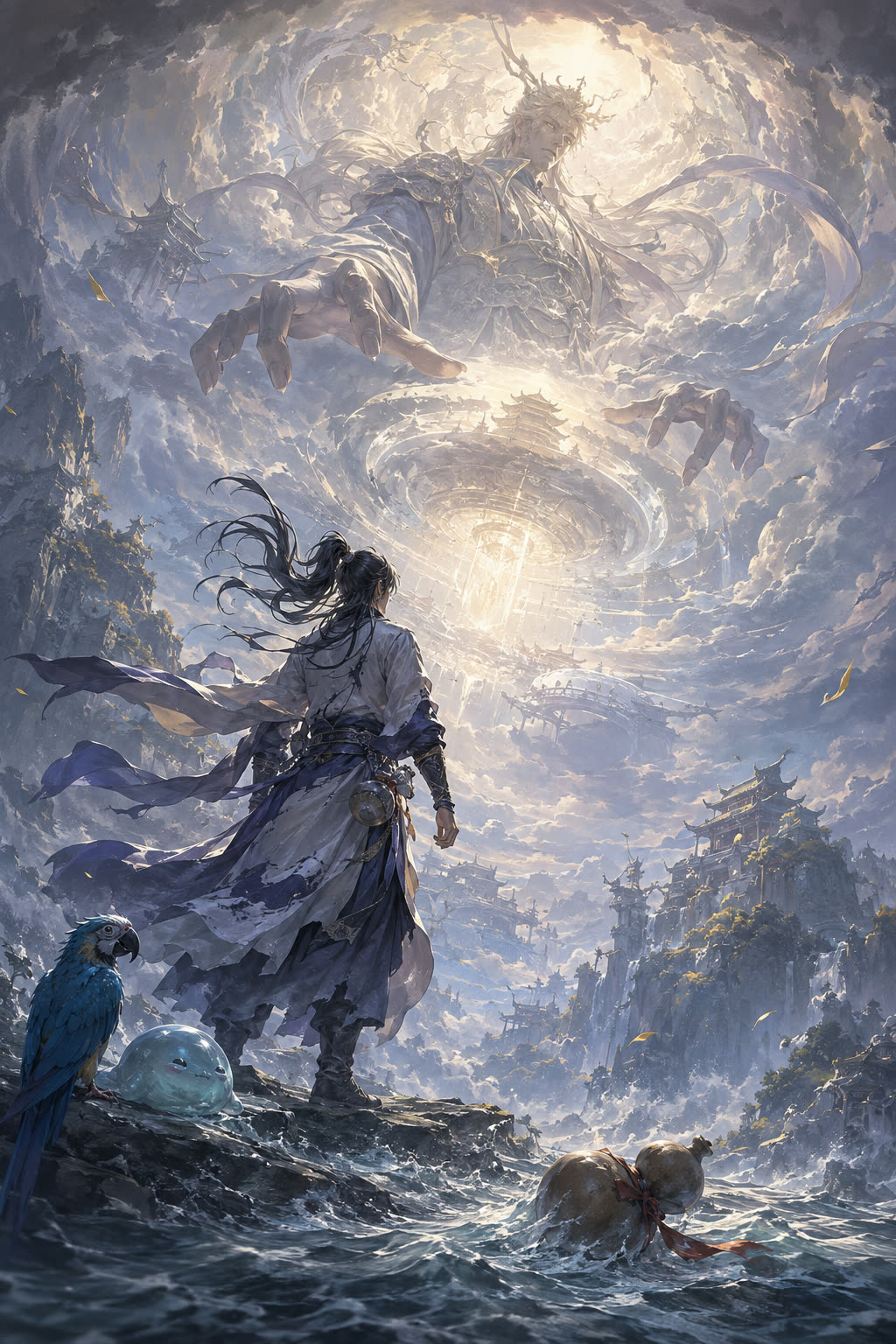
The world widens from one backward sect to the full mountain-and-sea cosmology. Meng Hao moves through the Southern Domain, the ancient demon-sealing path, the Ninth Mountain and Ninth Sea, and eventually the Vastness beyond, where the Thirty-Three Heavens press in and the highest realm is transcendence itself. He masters alchemy, seizes perfect foundations, and carries a parrot and a strange jelly as comic companions. The scope is vast, yet the story keeps returning to one man’s will against the order of the heavens.
The book’s pulse is “stubborn and devoted.” Meng Hao is greedy, clever, and occasionally shameless, but his love for Xu Qing anchors him, and his refusal to bow to fate is the engine. Romance sits close to the center, a single deep bond rather than a crowd. What lingers is the strange beauty of a scholar who started by giving up on his dreams and ended by telling the universe what is allowed to exist.
II. Highlights
The gourd into the river
Meng Hao, broke and freshly failed, floats a gourd of ambitions down the river toward the distant capital he will never reach. The image opens the book with real loss, and the cultivation world that follows feels earned rather than granted.
Yourself is the only reliance
The Reliance Sect teaches its name as a joke, but Meng Hao makes it a creed. When the sect’s backers fail and the strong abandon him, he decides the only backer worth having is himself, and that decision shapes every later triumph.
The purple sea and one tear
Pursuing a breakthrough, Meng Hao fuses with the purple sea and loses himself to the demon path, memory and mercy washed away. Xu Qing’s single tear breaks through the change and calls him back. The scene is the emotional core of the whole arc.
Sealing the heavens
By the end, Meng Hao stands beyond the mountains and seas, facing the heavens themselves with the power to permit or erase. The closing image of a lone sail at the sky’s edge leaves him not conquered but free, sailing out to settle accounts with the cosmos.
IV
Should you read it?
Reasons to read
- The premise inverts the genre. A hero who wants to seal the heavens, not join them, gives the familiar climb a fresh and brazen edge.
- The prose is among the most literary in Chinese web fiction. Er Gen writes melancholy and beauty into a power fantasy without losing the drive.
- I Shall Seal the Heavens is Er Gen's signature xianxia, the one that turns the usual cultivation creed inside out. Most cultivation heroes want to ascend, to join the heavens. Meng Hao wants to seal them. The book opens on a line that becomes his whole religion: if I want something to exist, heaven cannot lack it; if I want…
Reasons not to read
- The pacing is slow and contemplative, and the middle leans on long arcs and repetition that test impatience.
- Meng Hao's greed and trickery can read as unlikeable to readers who want a noble, straight-ahead hero.
- The imported guide still needs a final editorial pass.
Who it fits
- Fans of character-driven xianxia who want poetry with their power fantasy;
- readers who enjoy a cunning, flawed hero and a single deep romance;
- anyone curious why Er Gen is considered a step above the typical grind.
- Conversely, if you need fast action, a harem, or a cheerful power trip, this will feel too slow and solemn.
- readers who enjoy a cunning, flawed hero and a single deep romance;
- anyone curious why Er Gen is considered a step above the typical grind.
- Conversely, if you need fast action, a harem, or a cheerful power trip, this will feel too slow and solemn.
- Readers looking for a different reading experience.
Reader community
Would you recommend it?
Register or sign in to recommend this novel and comment.
Reader comments
0 comments