I. Overview
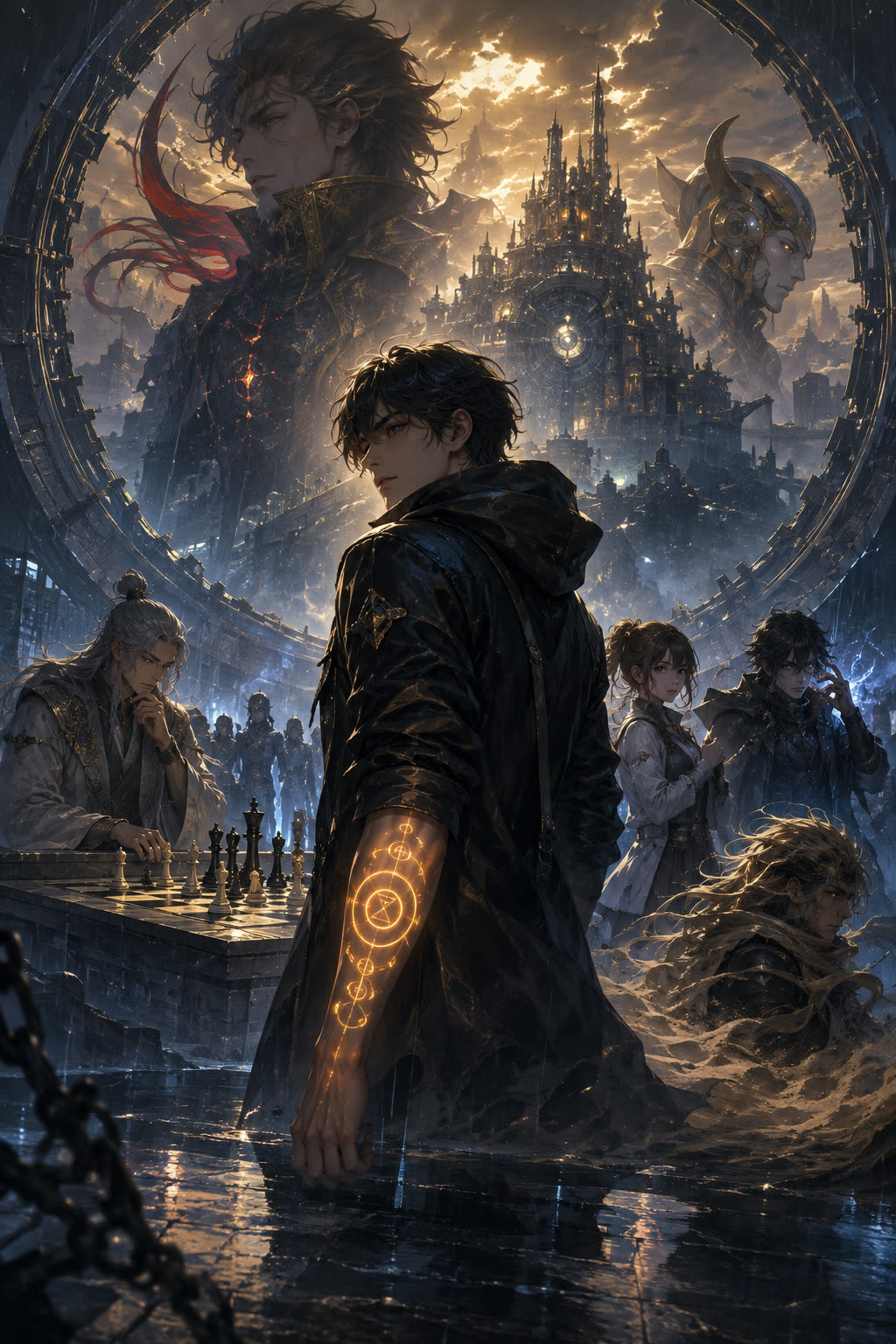
American readers often meet Chinese web fiction through cultivation epics set in invented dynasties. This one starts in a rainy modern city and refuses to leave the real world behind. A seventeen-year-old named Qing Chen carries a glowing countdown on his arm. When it hits zero, he does not wake from a dream. He is torn out of his drab life and dropped into a steel-and-surveillance prison in a parallel “inner world,” a mechanical civilization run by vast clans. He is not the only one. Hundreds of “time travelers” cross from his Earth to this place, and most of them are terrified.
Qing Chen is not. He survives the prison by solving a famous chess endgame for Li Shutong, a serene martial master who becomes his teacher and pulls him into the Knights, an order built on vows rather than force. He also learns a secret: he is the hidden younger son of the Qing clan, one of the consortiums that rule the inner world, and his brother is the clan’s “Shadow,” the underground enforcer who does the dirty work. The brother is dying from the cost of his own power, and he has chosen to spend his last months sharpening Qing Chen.
From that core the story widens into clan assassinations, numbered “forbidden zones” that grant strange strength, and a catalog of cursed objects called the ACE-series taboo items. Qing Chen gathers a loud, loyal crew: Yangyang, the brave girl who becomes his anchor; Zhang Mengqian, a boy with a dangerous sixth sense; and Zard, an ally who melts into flowing sand. Rival houses (Li, Chen, Kamiyo, Kashima) close in. The scale climbs from prison yards to demigod duels, artificial intelligences named One and Zero, and wars that spill across worlds.
Beneath the spectacle, the book stays small and warm. A lonely teenager given a second life decides that loyalty and warmth matter more than the cold arithmetic of power. The author is known for wit, and the humor never lets the darkness flatten the characters.
II. Highlights
The chess game in the prison yard
Qing Chen, a new inmate, walks past every bully to challenge Li Shutong at a board. He solves a “unwinnable” endgame in fifteen moves. The whole fortress goes silent. That single scene sets his reputation, his mentorship, and the book’s fondness for brains over brawn.
The Shadow’s last spring
Qing Chen’s brother, the clan’s enforcer, robs rival half-demigods of their vegetable garden as a joke while his own body fails from power backlash. The comedy and the mortality sit in the same frame, and the bond between the brothers carries the emotional weight of the whole series.
The forbidden zones
Each numbered wilderness (001, 002, 008) rewrites its own rules. One plays like a deadly amusement park; another like a puzzle box. Qing Chen enters them to grow, and the set-pieces show the author at his most inventive.
The war of the consortiums
When the rookie clansmen of the Qing and Li houses ride out for a “spring hunt,” Qing Chen removes them with a single anti-materiel rifle and a sand-borne ally. The scene captures how a clever underdog turns an assassination into a joke.
IV
Should you read it?
Reasons to read
- A fresh premise: modern Earth and a mechanical parallel world linked by "time travelers," not another generic sect.
- Genuine heart. The mentor bond and the brother bond land harder than the power creep.
- Smart, funny prose that respects the reader's intelligence.
- American readers often meet Chinese web fiction through cultivation epics set in invented dynasties. This one starts in a rainy modern city and refuses to leave the real world behind. A seventeen-year-old named Qing Chen carries a glowing countdown on his arm. When it hits zero, he does not wake from a dream. He is torn out of his drab…
Reasons not to read
- The length is real. Casual readers may tire before the late-worldbuilding pays off.
- The romantic thread is light if you came for love stories.
- Clan politics can blur together across the long middle.
- The imported guide still needs a final editorial pass.
Who it fits
- Readers who liked Lord of the Mysteries's urban-weird tone, progression fans who want brains and loyalty over brute grinding, and anyone curious how Chinese web fiction handles a near-future, cross-world setting.
- Readers exploring Chinese web fiction.
- Clan politics can blur together across the long middle.
- Who it fits Readers who liked Lord of the Mysteries's urban-weird tone, progression fans who want brains and loyalty over brute grinding, and anyone curious how Chinese web fiction handles a near-future, cross-world setting.
- Readers looking for a different reading experience.
Reader community
Would you recommend it?
Register or sign in to recommend this novel and comment.
Reader comments
0 comments