I. Overview
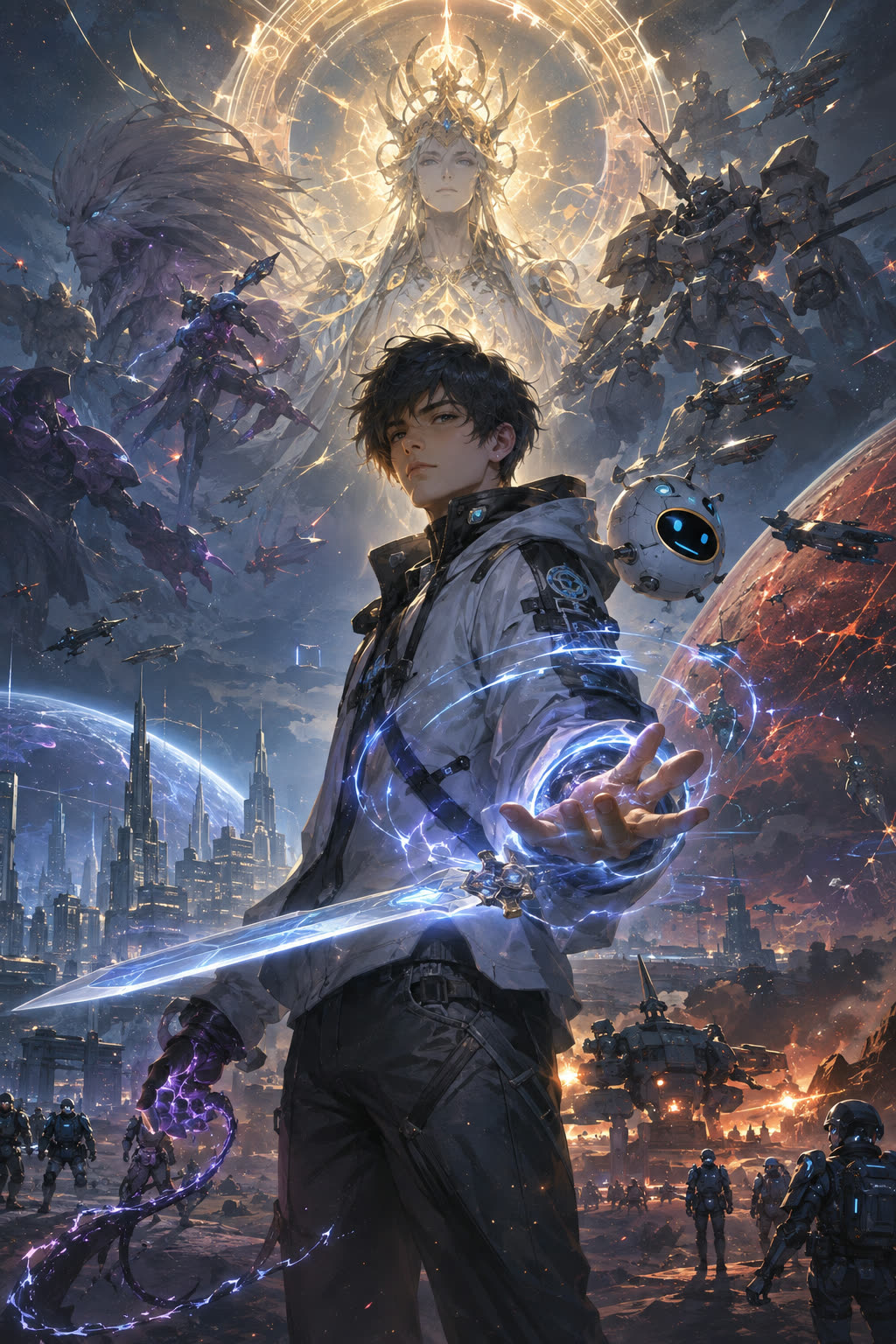
Most cultivation stories ask you to believe in qi. The Great Genetic Era asks you to believe in biology, then drops the punchline that science and myth are the same road. The book opens in the year 2137, a century after humanity first met intelligent life from beyond the stars and got invaded for the trouble. Earth, now called the Blue Star, survives behind a defensive alliance, and the single exam that decides a young person’s future is no longer the college entrance test. It is the Gene Unified Exam, and passing it earns a vial of gene-liberation serum that can rewrite your body.
Xu Tui is the reader’s way in. A high school senior from Jincheng, he scrapes past the double-excellent line and discovers his awakened trait is a “mystery type” genetic base point. That means the mind: sensory perception, a flying sword controlled by thought, and a mental whip that strikes without touching. The early volumes read like a school story with the dial turned up. Xu Tui spars on rankings, annoys his teachers, and builds a sharp rivalry with a brilliant researcher named An Xiaoxue, while an AI companion named A Huang trades barbs with him. The tone is lighter than most web fiction of its length, and the comedy is part of the appeal.
The frame widens from classroom to continent to solar system. Once Xu Tui joins the gene warriors fighting the cosmic invasion, the book becomes a war story against alien coalitions: the Spirit Clan, the Daxi, the Mechanical Spirits, and the Fission Clan, each with their own agenda for Earth. Mars and the Moon become battlefields, source crystals become currency, and power is quantified in planetary levels and beyond. The science-fiction furniture, quantum gates, and starships, sits comfortably next to a slower revelation that humanity’s genetic gifts trace back to an ancient Heavenly Court, and Xu Tui begins inheriting its seals and authority.
What sustains the long run is the blend. Pig Sanbu keeps one foot in hard-edged military sci-fi and one in cultivation escalation, so the progression always has a target: not just a higher realm, but a home planet that keeps needing rescue. Xu Tui grows from a cheeky student into a commander who personally tilts galactic battles, and the series closes with humanity claiming its place among the stars rather than begging to keep it. It is a power fantasy with a rifle in one hand and a flying sword in the other.
II. Highlights
The gene exam premise
The opening sells a future where your worth is literally measured in awakened genetic base points, and a failed serum means death on the spot. The stakes feel scientific instead of mystical, which sets the book apart from its peers. - Xu Tui’s mystery-type powers. Watching a high schooler learn to throw a thought-controlled flying sword and a mental whip turns the school arc into a slow-burn superhero origin. The ability system stays concrete because every gain is a counted base point. - The alien war. The shift to Mars and the Moon, where Blue Star forces fight the Spirit Clan and its allies, gives the progression a cause bigger than the hero. The battles are tactical, not just flashy. - The Heavenly Court reveal. The late discovery that human genes descend from an ancient celestial court, with Xu Tui claiming its seals, ties the sci-fi to myth and explains why the powers scale the way they do.
IV
Should you read it?
Reasons to read
- You want cultivation power progression wearing a science-fiction suit.
- The humor is rare for the genre and keeps the long run readable.
- The alien-war setting gives the climb a clear, recurring stakes.
- Most cultivation stories ask you to believe in qi. The Great Genetic Era asks you to believe in biology, then drops the punchline that science and myth are the same road. The book opens in the year 2137, a century after humanity first met intelligent life from beyond the stars and got invaded for the trouble. Earth, now called the…
Reasons not to read
- The school-arc comedy can feel jarring against the later genocide-scale war.
- Romance and side characters stay lighter than the central power curve.
- At full length, the galactic arcs repeat the rescue-Earth pattern.
- The imported guide still needs a final editorial pass.
Who it fits
- Fans of system sci-fi and military cultivation such as Warlock of the Magus World or The Mech Touch.
- A strong pick for readers who like their leveling quantified and their heroes fighting for a specific home.
- Readers exploring Chinese web fiction.
- A strong pick for readers who like their leveling quantified and their heroes fighting for a specific home.
- Readers looking for a different reading experience.
Reader community
Would you recommend it?
Register or sign in to recommend this novel and comment.
Reader comments
0 comments