I. Overview
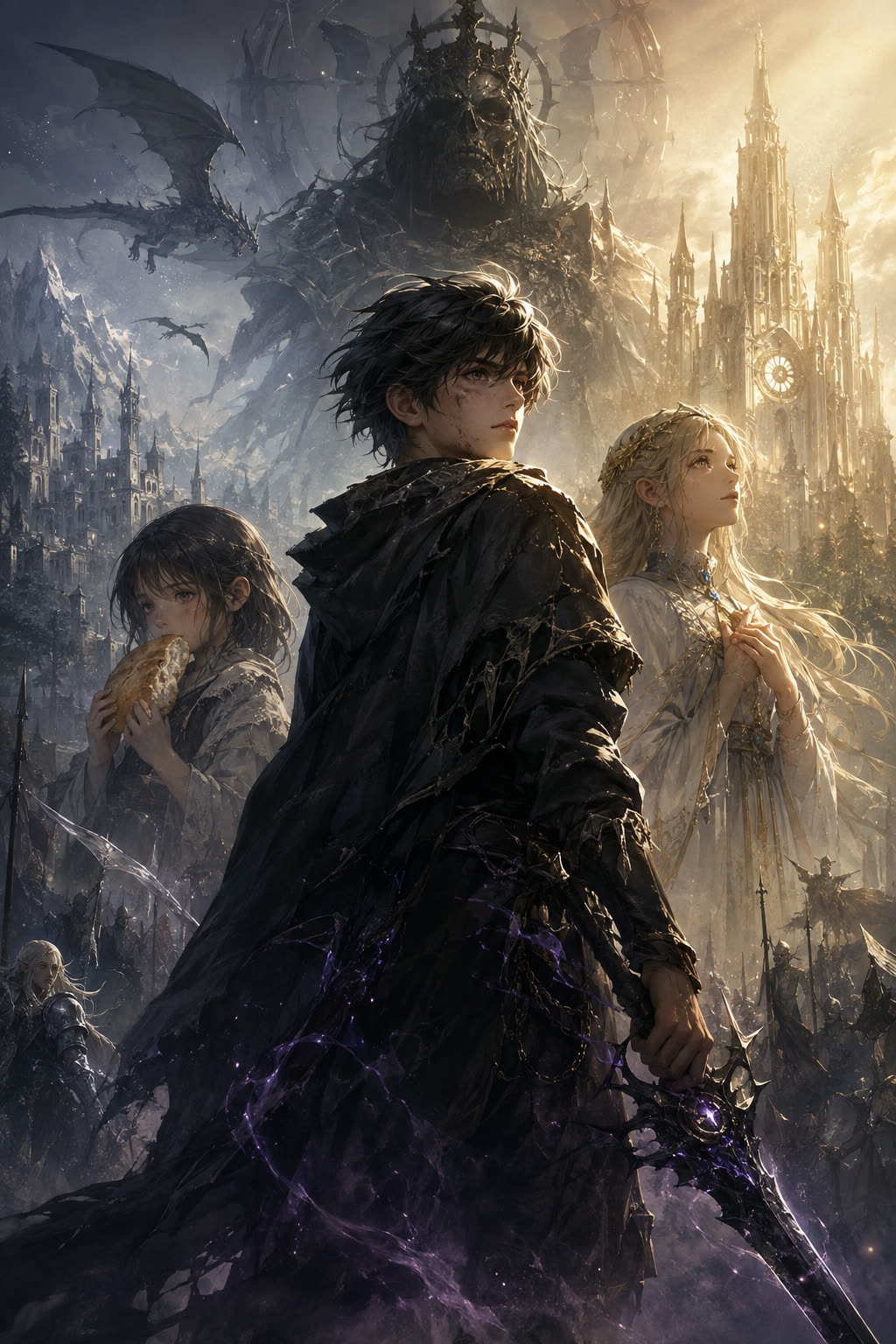
Western fantasy readers will feel at home here faster than with most Chinese web novels. The Kind Death builds a classic sword-and-sorcery map: the Tianyuan Continent, five rival nations, and a central Holy Church whose light mages hold the highest authority. Elves, dwarves, winged folk, half-beasts, and dragons share the land with humans, while assassin and thief guilds work the shadows. Into this world drops A’Dai, a dim-witted but warm-hearted orphan who survives as a pickpocket in a frozen border city, stealing so he and the one friend who was kind to him can eat.
The story earns its strange title early. A master alchemist named Goris pulls A’Dai off the street and makes him an apprentice, and for the first time the boy is fed and taught instead of beaten. When Goris is murdered, A’Dai sets out for revenge and, through a chain of inheritances, takes up the mantle of the Death God: the cursed Pluto sword, the Nine Arts of the Underworld King, and a destiny to carry death across the continent. What makes him different from every other reaper is the part he never loses. He remains the same soft-hearted boy who once split his last crust of bread.
The stage widens from a single city into the whole continent and then beyond it. A’Dai moves through the Church’s politics, the sword saints of rival empires, the elf forests and dragon eggs, and finally the millennium catastrophe that drags the demon realm into the mortal world. The book’s pitch line says it plainly: kindness and evil combined, light and darkness made one. A’Dai becomes the instrument of death that the age requires, yet he carries his mercy into the role.
What lingers is the emotional cost. The girl who was his only friend as a child meets a tragic end; a later bond with the cardinal’s daughter Xuanyue gives the book its heart; and the final confrontation with the previous Death God, Mandoen, turns personal when it becomes a father-and-son reckoning. Tang Jia San Shao wrote this early in his career, and its sentiment runs hot and open. Readers who want a clean, emotional heroic fantasy will find the kind of book that made him China’s best-selling web author.
II. Highlights
The boy and the alchemist
The opening chapters earn their weight: a starving, slow-witted child taken in by a gruff master who actually feeds him. When Goris dies, the revenge quest that follows feels like a real loss, not a plot beat. - The kind Death God. A’Dai inheriting the Pluto sword and the underworld arts while still pausing to spare the weak is the book’s central tension. The “death incarnate with a gentle hand” idea stays fresh across the long arc. - The friends who define him. Yatou, the orphan girl who first showed him kindness, and Xuanyue, the cardinal’s daughter, frame A’Dai’s humanity. Their fates give the power fantasy its emotional spine. - The millennium catastrophe. The closing war against the demon realm, with gods and demons walking the page and a father-son duel against the old Death God, pays off the setup in full heroic-fantasy style.
IV
Should you read it?
Reasons to read
- You want Western-style fantasy (magic, church, dragons) from a Chinese web author.
- The "gentle Death God" premise keeps the power fantasy emotionally grounded.
- The arc is complete and self-contained at a manageable length.
- Western fantasy readers will feel at home here faster than with most Chinese web novels. The Kind Death builds a classic sword-and-sorcery map: the Tianyuan Continent, five rival nations, and a central Holy Church whose light mages hold the highest authority. Elves, dwarves, winged folk, half-beasts, and dragons share the land with humans, while assassin and thief guilds work the…
Reasons not to read
- The prose leans sentimental and the morality stays black-and-white.
- Side characters can feel like archetypes rather than people.
- Fans of grim, ambiguous fantasy will find it too earnest.
- The imported guide still needs a final editorial pass.
Who it fits
- Readers who enjoyed early Tang Jia San Shao or light heroic fantasy like Dragonlance and Eragon.
- A good entry point for Western readers curious about Chinese web fantasy without the 2,000-chapter commitment.
- Readers exploring Chinese web fiction.
- A good entry point for Western readers curious about Chinese web fantasy without the 2,000-chapter commitment.
- Readers looking for a different reading experience.
Reader community
Would you recommend it?
Register or sign in to recommend this novel and comment.
Reader comments
0 comments