I. Overview
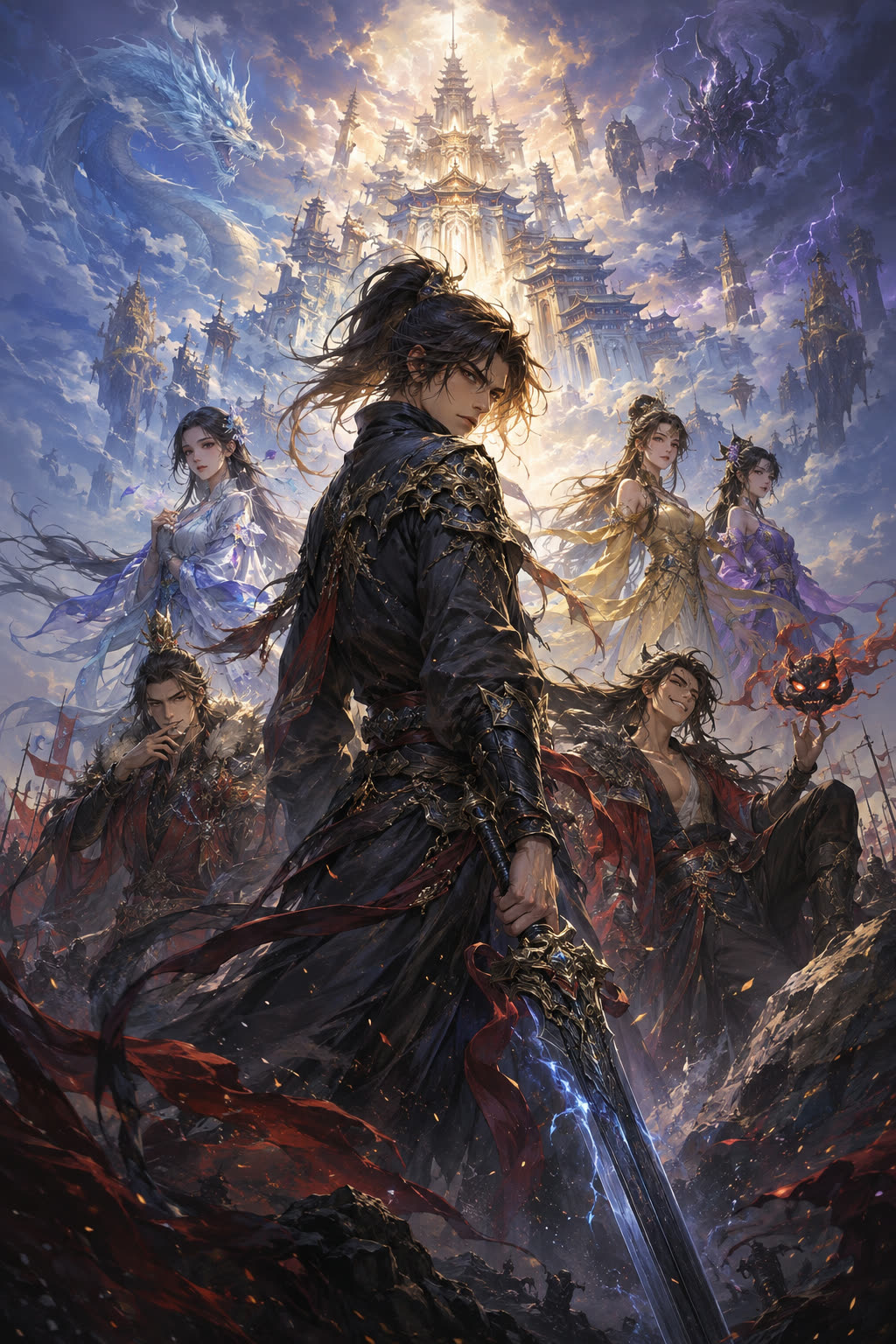
Chu Yang dies at the top of the world, surrounded by the men who betrayed him, the continent’s greatest sword still in his hand. He is the Ninth Sword Master of the Nine Tribulations, and the sword’s soul throws him back to his sixteen-year-old body with every ending already written in his head. Think Crouching Tiger crossed with a rebirth power-fantasy: the hero gets a do-over, and this time he means to save the girl he failed, the brothers he lost, and the version of himself that died cold.
The book opens on that last stand at the Wind-Thunder Terrace, then snaps him back to a teenage disciple everyone underestimates. The first stretch is a chess match of wits against the brilliant strategist Diwu Qingrou, played while Chu Yang builds a shadow organization, earns the feared nickname “King of Hell Chu,” and overturns the politics of the Lower Heavens to put his ally Tie Butian on a throne. The plotting is the point. He races a clock only he can see, driven to rewrite the endings he already knows.
Chu Yang climbs out of that minor sect into the warring clans of the Middle Heavens, rises through the estranged Chu family in the Upper Heavens, then breaks past the ceiling of the mortal world entirely into the Nine Heavens Palace and the long war beyond the heavens against the demon horde, until he and his sworn brothers fly out together into the open cosmos. Every layer he reaches is older and hungrier than the last.
What lasts is the brotherhood. The creed that doomed him in his first life, “ultimate in emotion, ultimate in sword,” becomes the thing that saves him here. Mo Qingwu, the girl his pursuit of the blade let die, and Tan Tan, the absurd, self-loving demon who grows into his closest brother, keep a brutal road human. The novel is long, loud, and loyal to the bone. It is a harem, a war story, and a reunion all at once.
II. Highlights
The last stand at Wind-Thunder Terrace
Bleeding, outnumbered, and offered his life if he surrenders the sword, Chu Yang only laughs. He knows exactly who leaked his secret and why, and he dies on his feet rather than hand over the one thing everyone is killing for. The opening sells the whole premise in a single unbowed frame: this is a man who would rather burn than bend.
King of Hell Chu runs a con
Deep in the Upper Heavens, Chu Yang spots a wounded enemy hiding among civilians and decides the man needs a bad day. He bursts into theatrical tears, claims to be the stranger’s long-lost hometown buddy “Gao Daquan,” and wonders aloud where his dear friend’s sister Wang Xiaoliu has gotten to. The crowd turns on the bewildered “Wang Laowu,” and Chu Yang beams through the whole farce. It is the clearest look at his mischief and nerve.
Tan Tan, the Sacred King
Chu Yang’s junior brother is a walking insult to dignity: vain, clumsy, impossible. Yet when the demon clan needs a ruler, Tan Tan becomes its Sacred King and protects a defeated family purely because his brother asked. “We’re brothers, what’s it to you?” he snaps at anyone who questions it. The friendship carries more weight than the comedy lets on.
The Throne’s Wedding
Millions roar “Bless the Throne” as Chu Yang marries his four wives, Mo Qingwu, Tie Butian, Wu Qianqian, and Zi Xieqing, in one ceremony. The moment the vows land, the usurper Holy Monarch crashes the party, so the newlyweds go kill him together. Few books pivot from tenderness to battle that fast, and fewer still make it feel right.
IV
Should you read it?
Reasons to read
- The brotherhood is the engine. The Nine Tribulations brothers are funnier, warmer, and more loyal than most Western ensemble casts, and their bond carries the whole mountain of plot.
- Rebirth with a face. Chu Yang is not farming power for its own sake; he is racing to save specific people, and the romance with Mo Qingwu lands harder because of the life he already lost her in.
- A proper progression climb. If Cradle or Worth the Candle hooked you, the nine-heavens ladder delivers a long, earned rise with real payoffs.
- Chu Yang dies at the top of the world, surrounded by the men who betrayed him, the continent's greatest sword still in his hand. He is the Ninth Sword Master of the Nine Tribulations, and the sword's soul throws him back to his sixteen-year-old body with every ending already written in his head. Think Crouching Tiger crossed with a rebirth…
Reasons not to read
- It is a harem. Four wives, no apology. Walk in knowing that, because it is central and never hidden.
- It is enormous, and the middle sags. The Tie Yun kingdom arc spans volumes of maneuvering; readers who need tight plotting will feel the weight.
- The tone whiplash is real. The book swings from slapstick to solemn brotherhood in a paragraph. Anyone wanting consistent grimness or literary restraint will bounce.
- The imported guide still needs a final editorial pass.
Who it fits
- Fans of progression fantasy, cultivation epics, reincarnation do-overs, and camaraderie-driven stories who don't mind a long, joke-armed ride.
- Not for you if harems put you off, if you want spare literary prose, or if an eight-million-character doorstopper sounds like a threat rather than a weekend.
- Readers exploring Chinese web fiction.
- Not for you if harems put you off, if you want spare literary prose, or if an eight-million-character doorstopper sounds like a threat rather than a weekend.
- Readers looking for a different reading experience.
Reader community
Would you recommend it?
Register or sign in to recommend this novel and comment.
Reader comments
0 comments